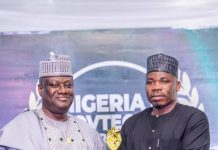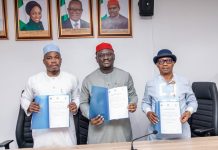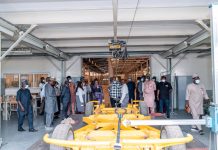


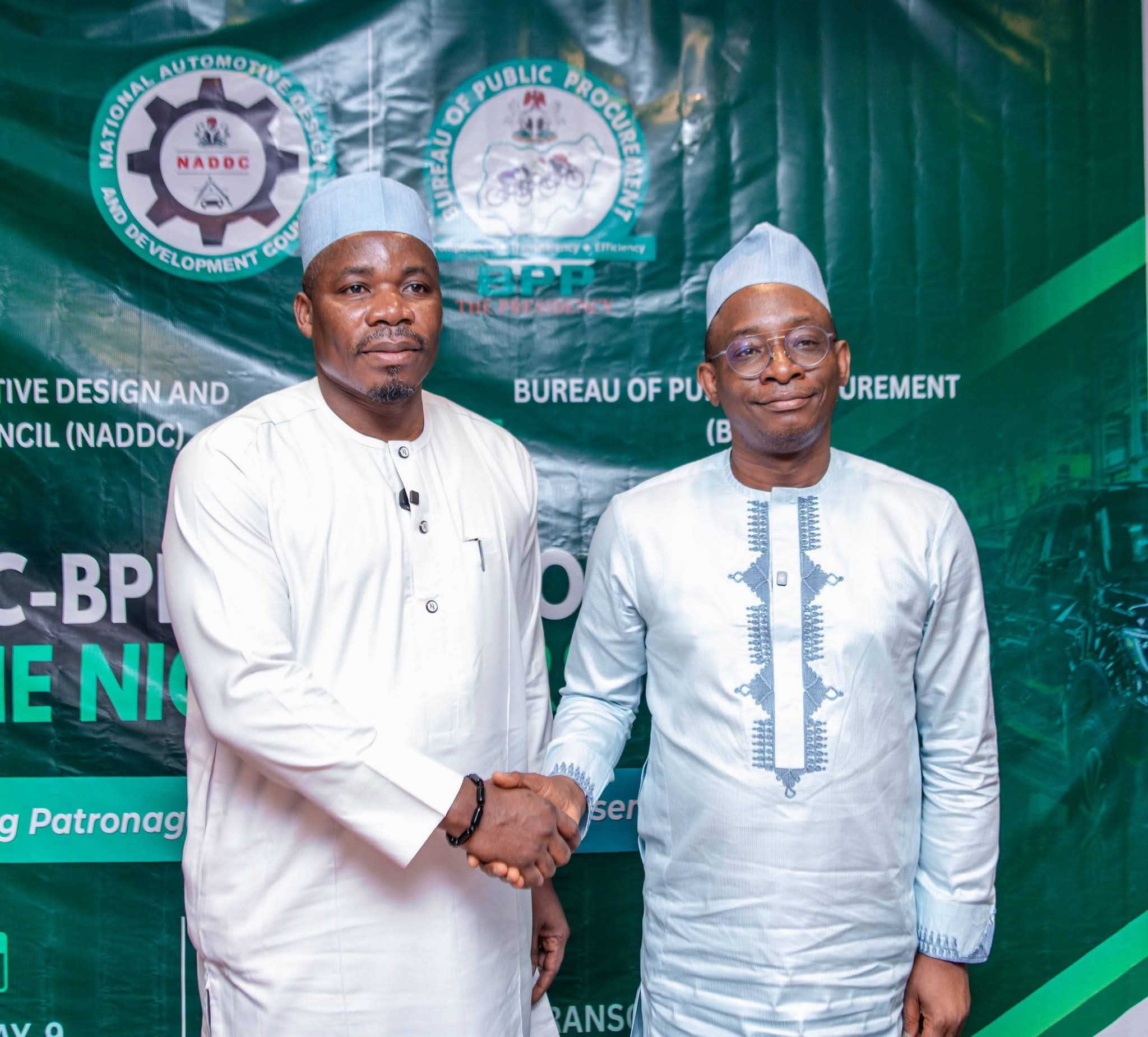
The National Automotive Design and Development Council (NADDC) and the Bureau of Public Procurement (BPP) have outlined plans to deepen the implementation of the Nigeria First Policy in the automotive sector, with a focus on boosting local production, creating jobs, strengthening Nigerian businesses and promoting the patronage of Made-in-Nigeria vehicles and automotive components. The agencies disclosed this on 9th October 2026, at a press conference held at the Transcorp Hilton Hotel, Abuja.
The Director-General of NADDC, Otunba Oluwemimo Joseph Osanipin, said the Council was committed to supporting local vehicle assemblers to transition from Semi-Knocked Down (SKD) assembly to Complete Knocked Down (CKD) production. He noted that increased domestic vehicle production would also create greater opportunities for local automotive component manufacturers and deepen local content development across the industry.
Osanipin stated that NADDC would continue to collaborate with the BPP and other relevant stakeholders to ensure effective implementation of the policy, stressing that companies that fail to comply with established government automotive regulations could be denied access to government patronage. He said the policy would encourage companies to expand their production capacity, reinvest in their businesses and create more employment opportunities for Nigerians.
The NADDC Director-General emphasised that sustained government patronage of locally manufactured vehicles and components would strengthen the domestic automotive value chain and provide the market confidence required for manufacturers to invest in higher levels of production. He added that the initiative was critical to achieving a more competitive, resilient and sustainable Nigerian automotive industry.
In his remarks, the Director-General of the BPP, Dr. Adebowale Adedokun, said the Bureau was developing an institutional framework, standard policies and an appropriate circular to guide the implementation of the Nigeria First Policy across relevant government organisations, following the directive of President Bola Ahmed Tinubu. He noted that the government had moved beyond policy declarations and commenced consultations with local automotive assemblers to better understand the challenges confronting domestic manufacturers, particularly the need for stronger demand for locally produced products.
Adedokun explained that the Nigeria First Policy was designed to strengthen Nigerian businesses and promote the use of Made-in-Nigeria products, including vehicles and automotive components. He noted that Nigerian companies were already producing components such as wipers and bolts, but required stronger market support and patronage to sustain and expand production.
According to him, successful implementation of the policy would promote industrialisation, create jobs for skilled workers and technicians, strengthen local supply chains and provide increased opportunities for young Nigerians. He added that stronger domestic production would reduce dependence on imported automotive products while encouraging investment, technology transfer and skills development within the sector.
Both agencies reaffirmed their commitment to sustained collaboration with local manufacturers and other stakeholders to ensure that the Nigeria First Policy delivers tangible benefits to the automotive industry and the Nigerian economy. They expressed confidence that effective implementation would position Nigeria as a competitive automotive manufacturing hub and a major supplier of vehicles, components and related products to the ECOWAS region and the wider African market.