

By Maymunah Zubair

President Bola Ahmed Tinubu has challenged African countries to move beyond dependence on externally developed space technologies and take a more active role in creating, owning and commercialising indigenous capabilities, declaring that the continent must become a meaningful participant in the emerging global space economy.
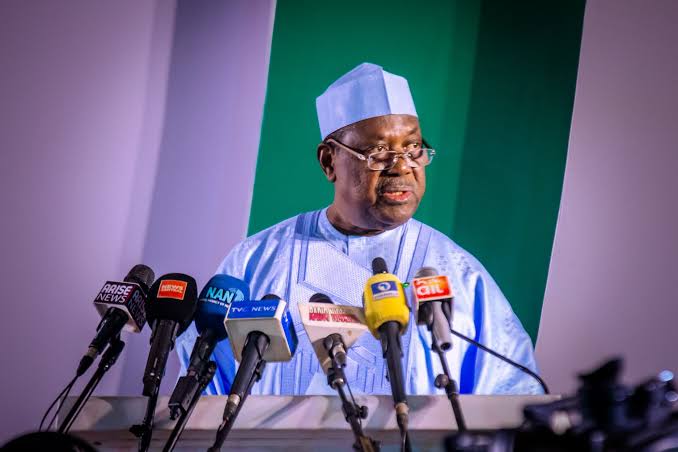
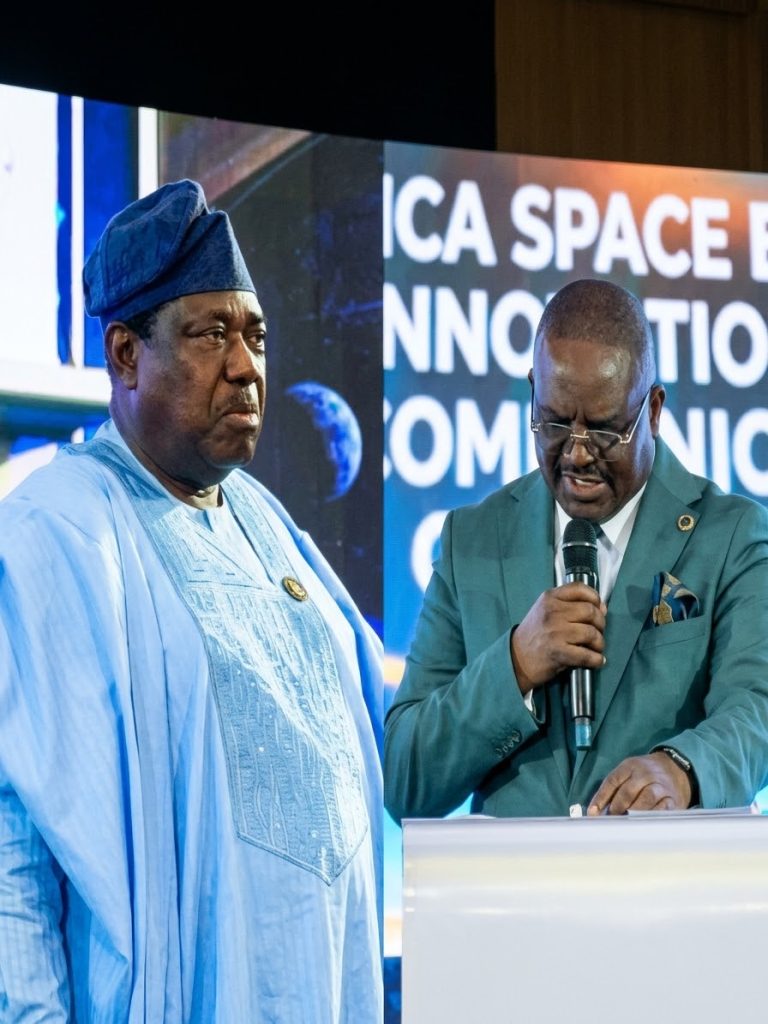
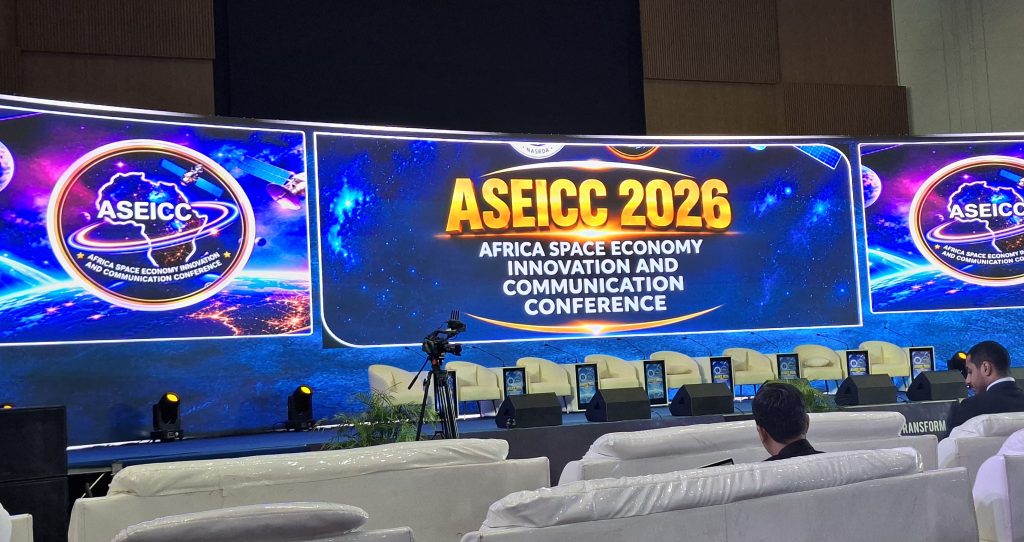
The President, who was represented by the Secretary to the Government of the Federation (SGF), Senator George Akume, made the call on Tuesday at the opening of the Africa Space Economy, Innovation and Communication Conference (ASEICC 2026), organised by the National Space Research and Development Agency (NASRDA) at the Bola Ahmed Tinubu International Conference Centre, Abuja.
The four-day conference, holding from November 24 to 27, has brought together government officials, heads of national space agencies, international delegates, diplomatic representatives, researchers, technology companies, investors and other stakeholders to examine the opportunities, challenges and investment prospects within Africa’s emerging space economy.
Speaking through his representative, President Tinubu acknowledged Nigeria’s progress in satellite technology, Earth observation, satellite communications and related applications through NASRDA, alongside the development of indigenous scientific and engineering capacity.
He noted that the country had trained scientists and engineers and established a foundation upon which a viable national space sector could be built. However, he stressed that the next phase must focus on translating scientific research and technological development into marketable products, viable enterprises and solutions to real-world challenges.
The President identified greater private-sector participation, increased investment, stronger collaboration between research institutions and industry, and an enabling policy environment as essential requirements for achieving this transition.
He observed that space technology offers significant opportunities across agriculture, financial services, security, telecommunications and disaster management, urging African countries to position themselves across the entire space economic value chain rather than remain consumers of technologies developed elsewhere.
Tinubu further called for deeper collaboration among African countries through their respective space agencies and continental platforms, advocating the pooling of resources, harmonisation of relevant policies, exchange of expertise and development of joint programmes to strengthen the continent’s competitiveness.
He expressed the expectation that the conference would produce practical and measurable outcomes, including viable investment opportunities, stronger institutional partnerships and actionable recommendations capable of advancing Africa’s space ambitions.
Describing the gathering as a strategic platform for shaping the continent’s participation in the global space economy, the President urged investors and industry leaders to embrace responsible investment and mutually beneficial partnerships that would generate lasting economic and social value.
He also reaffirmed the Federal Government’s commitment to strategic partnerships and cooperation with relevant institutions and organisations to promote knowledge exchange, technology development and new investment opportunities.
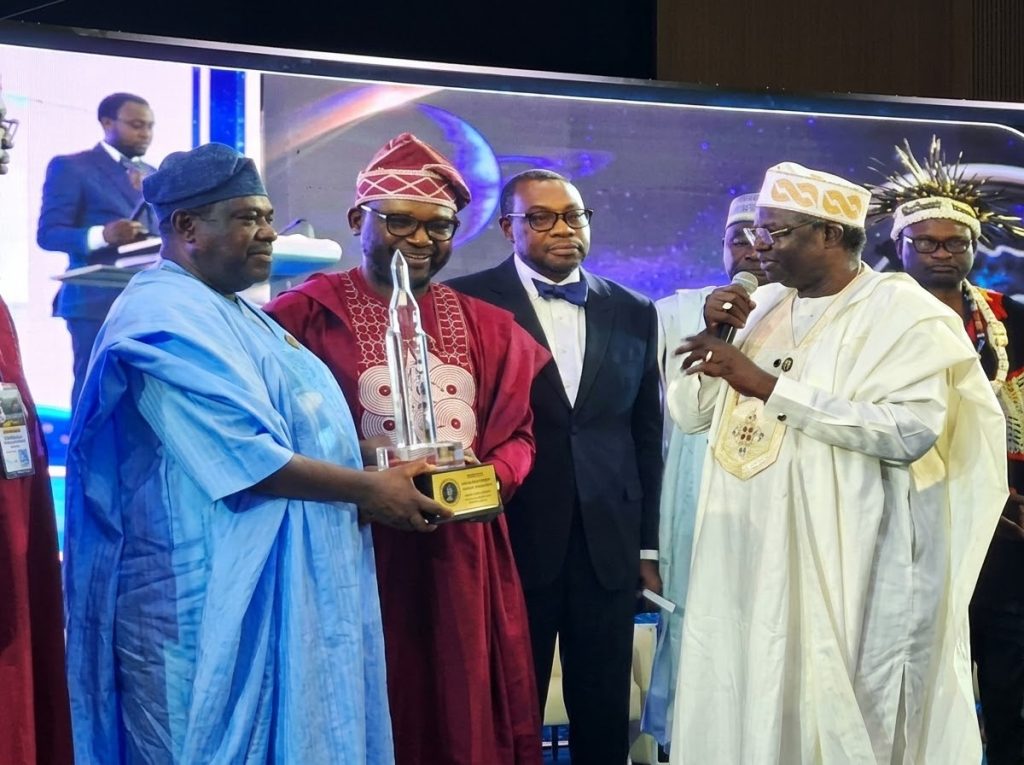
President Tinubu, who received the Grand Space Commander of the Federal Republic award during the ceremony, accepted the recognition with humility and gratitude on behalf of the Nigerian people. He subsequently declared the conference open, expressing optimism that its deliberations would help accelerate Africa’s transition from research and technological ambition to sustainable economic impact.
NASRDA showcases next phase of Nigeria’s space ambitions
In his welcome address, the Director-General and Chief Executive of NASRDA, Professor Matthew Olumide Adepoju, welcomed participants from across the world and called for meaningful collaboration, deliberation and investment to advance the continent’s space capabilities.

Adepoju emphasised the importance of using the conference to strengthen relationships among governments, space institutions, research organisations and private-sector stakeholders, noting that the development of a sustainable space economy requires collective commitment and purposeful partnerships.
Beyond his welcome address, the Director-General also used the occasion to highlight Nigeria’s ongoing technological ambitions and emerging areas of indigenous innovation.
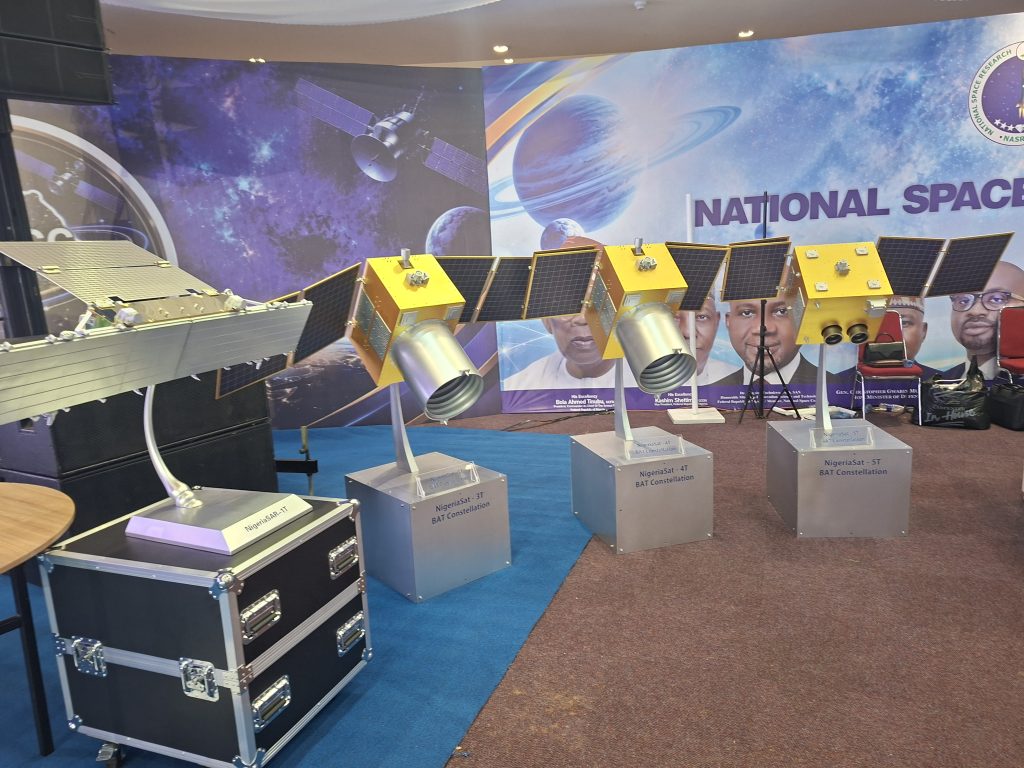
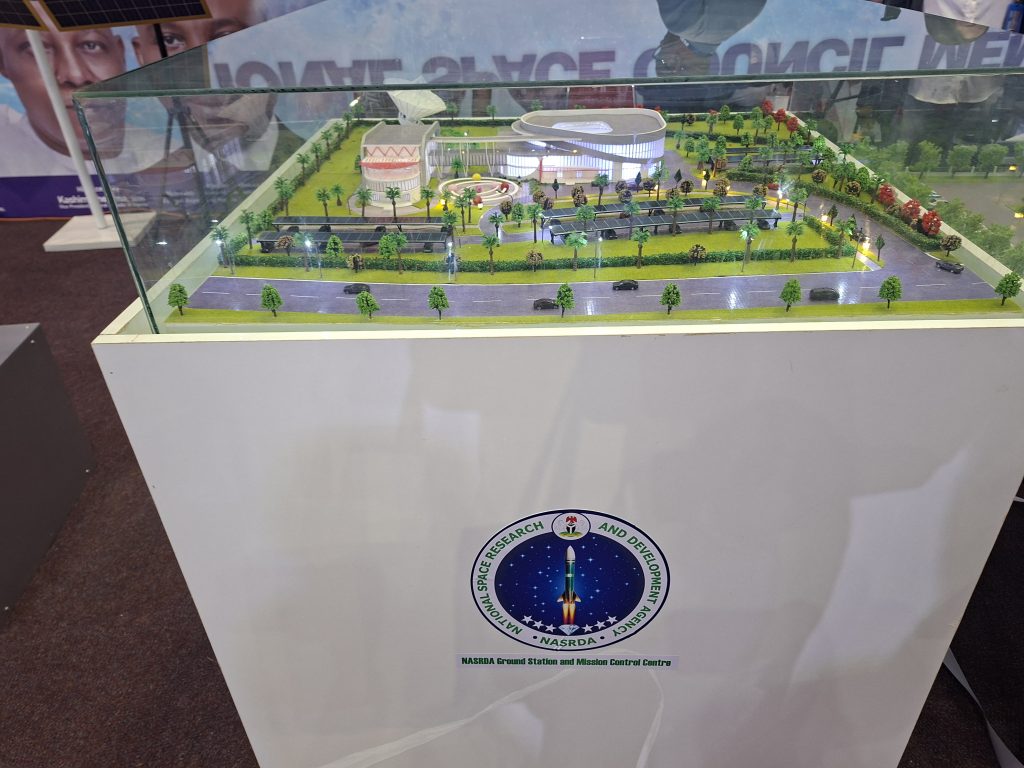
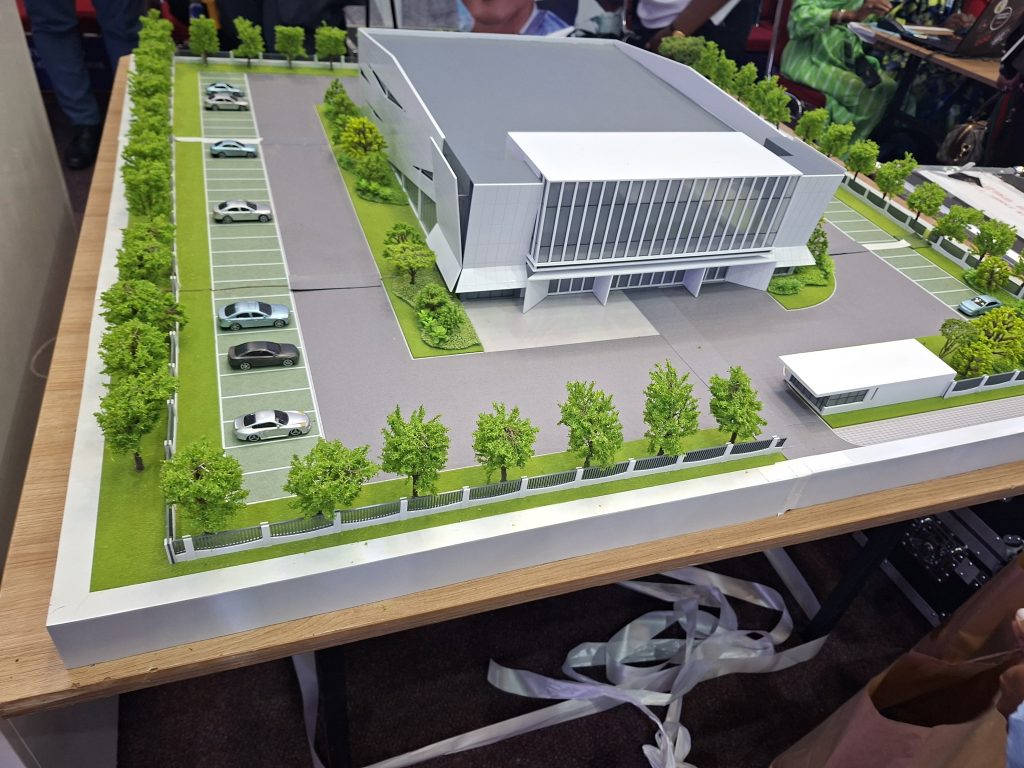
A major highlight was the unveiling of models of two new satellite systems, identified as NigeriaSat-3T and NigeriaSAR-1T, alongside a model of a proposed Ground Station and Mission Control Centre. The presentation offered a glimpse into the infrastructure and technological direction being pursued to strengthen Nigeria’s space capabilities and support future mission operations.
The Director-General also drew attention to an emerging graphene-based power bank initiative, highlighting Nigeria’s graphite resources and disclosing that intellectual property relating to the technology had been secured. He described the development as a significant innovation, noting its potential to demonstrate the wider technological and commercial applications of indigenous research.
The announcements formed part of a broader presentation of Nigeria’s efforts to expand its technological capacity and explore opportunities for translating scientific research into practical products and services.
The opening ceremony also featured the unveiling of the new Nigeria Space Digest, a publication intended to document developments, research, institutional activities and emerging opportunities within Nigeria’s space sector. Copies were distributed to distinguished guests and other high-level participants at the event.
The citation accompanying the conferment of the Grand Space Commander of the Federal Republic award on President Tinubu was presented by NASRDA’s Director of Media and Corporate Communication, Dr Felix Babatunde Ale, who also serves as Editor-in-Chief of the newly unveiled publication.
The award was subsequently presented to Senator Akume by Professor Adepoju, in the presence of senior officials and members of the National Space Council.
Taken together, the announcements underscored the Agency’s effort to position Nigeria’s space programme not only around satellite missions and scientific research, but also around infrastructure development, indigenous innovation, technology commercialisation and the broader opportunities of the space economy.
Nigeria’s policy and investment environment under focus
The Honourable Minister of Innovation, Science and Technology, Dr Kingsley Tochukwu Udeh, SAN, who served as Chief Host, highlighted the need to strengthen sector-specific infrastructure, expand investment opportunities and establish appropriate policy frameworks to support the development of the space economy.

His remarks reinforced the importance of creating an environment in which public institutions, private companies, research organisations and international partners can work together to develop indigenous technologies and expand the economic applications of space science.
Also speaking, the representative of the Senate President, Senator Iya Abbas, Chairman of the Senate Committee on Science and Technology, commended NASRDA and the conference organisers for convening what he described as a timely gathering.
He highlighted the importance of space science and technology to national development, particularly in areas such as surveillance and agriculture, and noted that the conference aligned with the Senate’s responsibility to create an enabling environment for space exploration and a sustainable space economy.
Abbas stressed the need for Nigeria and other African countries to develop the capacity to create and contribute to the emerging space economy rather than remain dependent on technologies developed elsewhere.
Adesina proposes $50 billion continental space funding initiative
A major contribution to the opening proceedings came from Dr Akinwumi A. Adesina, former President of the African Development Bank, who delivered the guest address on Building Africa’s Space Industry: The Role of Government, Private Capital and Indigenous Innovation.

Adesina challenged African governments to move beyond the traditional approach of acquiring technologies developed elsewhere, urging the continent to own, create and export its own space technologies and services.
Drawing attention to the continent’s enormous potential, he called for stronger government support for young innovators, increased investment in scientific research and the establishment of national initiatives capable of nurturing indigenous technological development.
He also proposed a continental funding mechanism through which African countries could jointly finance an ambitious space programme, suggesting an initial funding pool of approximately $5 billion to kick-start the initiative, with a broader long-term funding target of $50 billion.
The proposal reflected his argument that Africa’s space ambitions should be approached as a shared continental undertaking, supported by coordinated government action, private capital and sustained investment in research and innovation.
Adesina maintained that a stronger indigenous space industry would allow African countries to develop technologies and services suited to their needs, while creating opportunities for young people and positioning the continent to participate more competitively in the global space economy.
His intervention added a significant investment dimension to the conference’s discussions, particularly the question of how African countries can mobilise the scale of capital required to move from individual national programmes towards more ambitious continental capabilities.
Brazil identifies opportunities for Africa as a high-growth space market
Delivering the keynote address titled Space Economy: Africa as a High-Growth Frontier Market, the President of the Brazilian Space Agency, Dr Marco Antonio Chamon, examined the continent’s growing space ecosystem and the opportunities for cooperation between Africa and other emerging space markets.
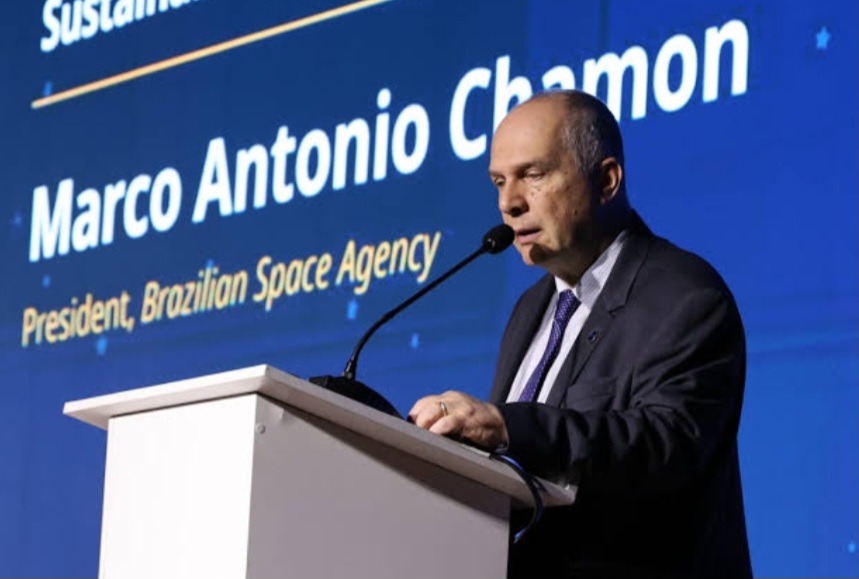
Drawing from Brazil’s experience in satellite development and applications, Chamon highlighted the importance of Earth observation, agricultural monitoring, environmental protection and international cooperation in building a sustainable space economy.
Citing industry projections, he placed the African space economy at approximately $25 billion in 2024, with the potential to reach about $40 billion by 2030, describing the projected expansion as evidence of the continent’s considerable growth prospects.
He noted that Africa already possesses an emerging ecosystem of national space institutions, satellite programmes and private-sector companies that could provide a foundation for greater participation in the global space industry.
Chamon drew attention to Brazil’s experience with satellite programmes, including the China-Brazil Earth Resources Satellite (CBERS) programme and Amazonia-1, as examples of how sustained investment and international partnerships can strengthen national capabilities and support practical applications.
He identified opportunities for Brazil-Africa cooperation in Earth observation and data applications, tropical agriculture and food security, as well as ocean and environmental monitoring.
In particular, he drew parallels between the Amazon rainforest and Africa’s Congo Basin, highlighting the potential for satellite technologies to support forest monitoring, environmental protection and climate-related research across the two regions.
He also emphasised the importance of cooperation in combining scientific research, technology, local knowledge and shared development priorities, arguing that space could provide new avenues for strengthening relationships between Brazil and African countries.
His presentation reinforced the broader conference message that Africa’s emerging space economy could benefit significantly from international partnerships that support knowledge exchange, technological development and the growth of indigenous capabilities.
Continental and international participation strengthens the conversation
The opening ceremony attracted a broad international audience, including diplomatic representatives, heads of national space agencies, government officials, researchers, industry players and private-sector stakeholders.
The diplomatic community was strongly represented, with ambassadors, high commissioners and other representatives of the international community joining delegates from across Africa and beyond.
Other international participants included representatives of the China National Space Administration and various research and space-sector institutions, alongside national and international private-sector concerns, including XRTech Group.
African participation was equally significant, with representatives of several national space agencies, including those of South Africa and Senegal, among others.
The gathering also featured a high-level panel discussion that brought together senior figures from the African and international space community, including representatives of the South African and Senegalese space institutions, with Chamon serving as lead discussant.
The discussion examined Africa’s position as an emerging space market, drawing on national experiences and regional best practices to explore investment opportunities, institutional challenges, technological development and the need for a coordinated continental approach.
The diversity of participation reflected the growing recognition that the future of Africa’s space economy will depend not only on the capabilities of individual countries, but also on the strength of partnerships across governments, research institutions, industry and international organisations.
From research capability to sustainable economic impact
The opening day of ASEICC 2026 has placed a central question before African governments, space institutions and private-sector stakeholders: how can the continent convert its growing scientific and technological capabilities into a sustainable, commercially viable space economy?
The contributions of the President, the Minister, the NASRDA Director-General, Adesina and Chamon collectively highlighted the need to move beyond satellite acquisition and research achievements towards indigenous innovation, commercialisation, investment, skilled human capital and practical space-based services that address the continent’s development priorities.
For Nigeria, the unveiling of new satellite models, proposed mission infrastructure and the Nigeria Space Digest, alongside emerging indigenous technology initiatives, provided a glimpse into the direction of the country’s next phase of space development.
The conference continues through Friday, with further engagements expected to explore investment opportunities, technology development, institutional partnerships and the practical steps required to expand Africa’s presence in the global space economy. The proceedings will culminate in a closing dinner and awards ceremony.
With participation spanning government, diplomacy, research, industry and investment, ASEICC 2026 offers an important platform for strengthening existing relationships, developing new areas of cooperation and identifying pathways for translating Africa’s space ambitions into measurable outcomes.
Ultimately, the conference’s significance will be measured not merely by the breadth of its participation or the ambition of its declarations, but by the extent to which its deliberations translate into implementable commitments, sustained investment and technological capabilities that deliver lasting value to African economies.