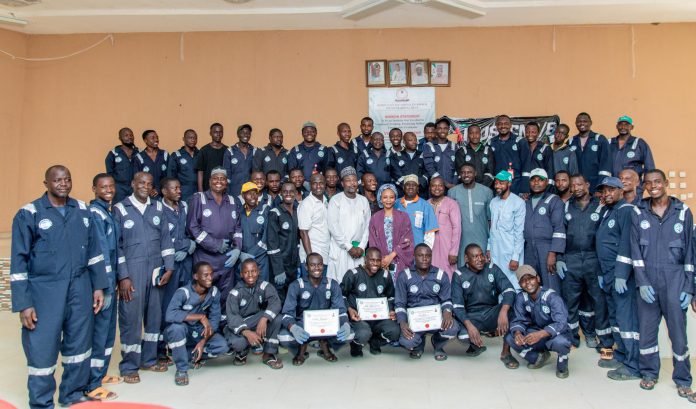
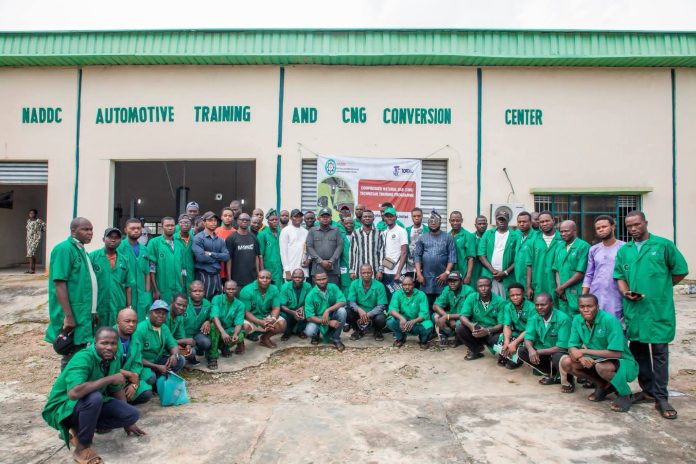
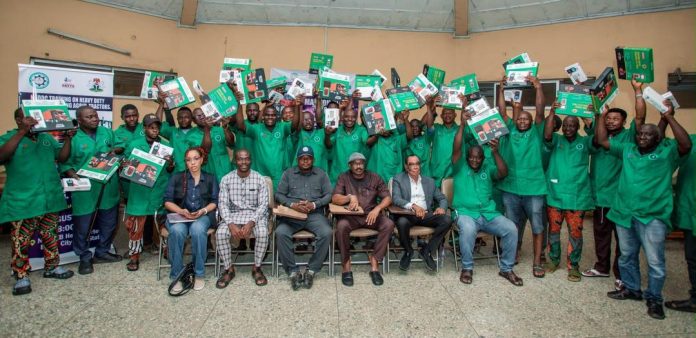
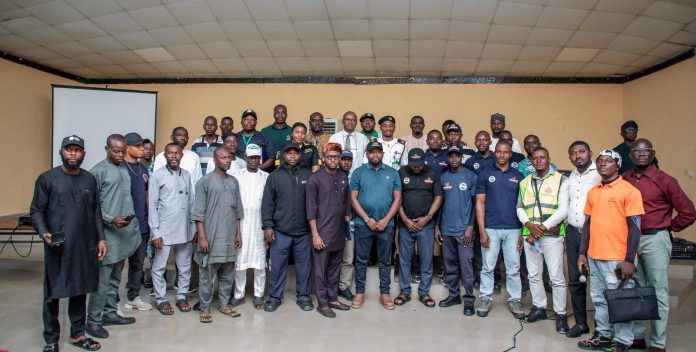
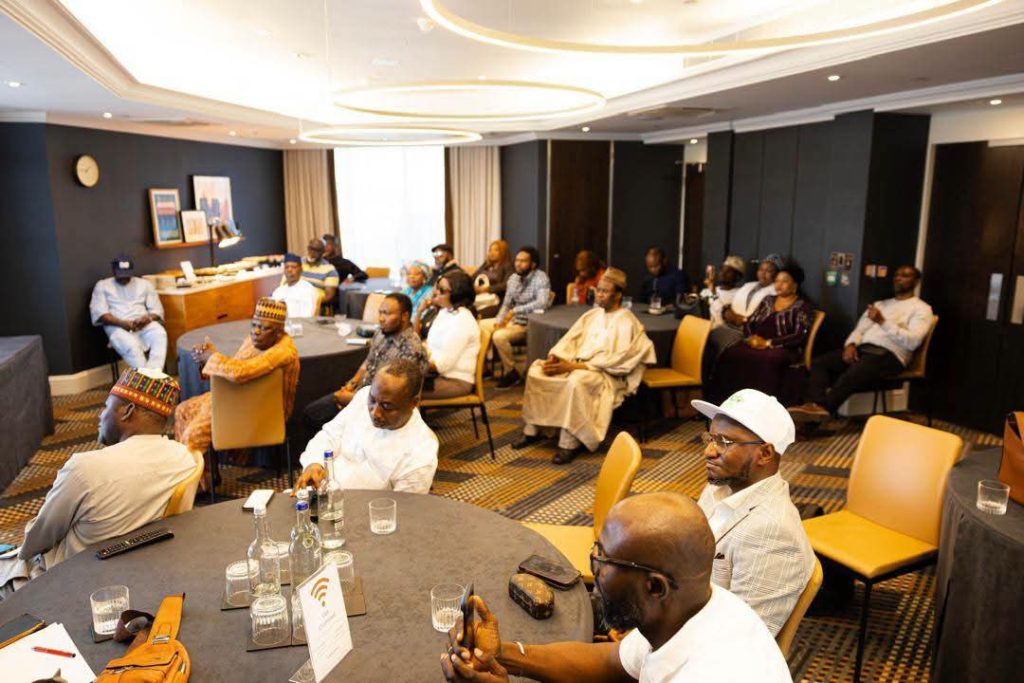
The National Automotive Design and Development Council (NADDC), in collaboration with Jennymond Systems Ltd., has concluded a two-week specialised training programme aimed at strengthening technical capacity and developing relevant skills within Nigeria’s automotive sector.
The training programme, which commenced on August 17 and concluded on August 28, 2026, had 50 technicians and youths as beneficiaries in Borno State. The programme focused on the conversion of vehicles powered by Premium Motor Spirit (PMS) to Compressed Natural Gas (CNG), in line with the Federal Government’s efforts to promote alternative and cleaner energy solutions in the transportation sector.
The beneficiaries were trained by Jennymond Systems Ltd. through intensive theoretical and practical sessions designed to equip them with industry-relevant knowledge and hands-on skills in CNG vehicle conversion, modern automotive systems, diagnostics, safety standards, installation and maintenance.
The initiative is aimed at enhancing the technical capacity of existing automotive technicians while equipping young participants with employable and entrepreneurial skills that can enable them to establish sustainable livelihoods and contribute meaningfully to the development of Nigeria’s automotive industry.
During the training in Borno State, the 50 beneficiaries underwent practical sessions covering CNG conversion processes, vehicle diagnostics, installation procedures, safety protocols and the maintenance of alternative-fuel vehicles. The hands-on approach was designed to ensure that participants could effectively apply the knowledge and skills acquired during the programme.
At the conclusion of the two-week training on August 28, 2026, the participants were presented with certificates of completion and empowerment tools to support the practical application of their newly acquired skills and enhance their capacity to provide CNG-related automotive services.
The initiative aligns with the objectives of the Nigerian Automotive Industry Development Plan (NAIDP) and the Federal Government’s Renewed Hope Agenda, particularly in the areas of cleaner energy adoption, youth empowerment, job creation, technical skills development and the promotion of a sustainable automotive ecosystem in Nigeria.
The National Automotive Design and Development Council (NADDC), in collaboration with TOFEKO Limited, is strengthening technical capacity in Nigeria’s automotive sector through a two-week specialised training programme for 300 technicians and youths across six states. The programme, which commenced on 17 August 2026, is being implemented concurrently in Ekiti, Imo, Kano, Nasarawa, Bauchi and Cross River States, with 50 participants drawn from each state. The beneficiaries are receiving specialised training in vehicle mechatronics and CNG retrofitting, with a strong emphasis on practical diagnosis, servicing, repair and maintenance of modern vehicles.
The participants are being trained by Bcephas Consults Limited, the technical consultant engaged for the programme, through a combination of technical instruction and hands-on practical sessions designed to equip beneficiaries with skills that can be applied directly in automotive workshops and other relevant areas of the sector.
In Ekiti State, where the training is currently ongoing, 50 technicians and youths from across the state are undergoing intensive practical sessions aimed at improving their understanding of modern automotive systems and strengthening their capacity to diagnose and resolve vehicle faults. The practical component of the programme exposes participants to contemporary vehicle technologies and diagnostic techniques, while enhancing their ability to service, repair and maintain vehicles more efficiently. The training is also expected to improve the quality of services provided by existing technicians and provide young participants with technical skills that can enhance their employability and entrepreneurial opportunities.
The ongoing training in Ekiti State is part of the wider programme taking place simultaneously in Imo, Kano, Nasarawa, Bauchi and Cross River States, where another 50 participants in each state are undergoing the same specialised training, bringing the total number of beneficiaries to 300 technicians and youths. The initiative is part of NADDC’s broader efforts to strengthen human capital development and upgrade technical skills within Nigeria’s automotive industry. It is particularly focused on improving the capacity of technicians to keep pace with emerging automotive technologies while equipping young Nigerians with practical and employable skills.
At the conclusion of the two-week programme on 28 August 2026, participants are expected to receive certificates of training and empowerment tools to support the application of the skills acquired. The intervention is expected to help beneficiaries improve their technical services, increase productivity and competitiveness and establish or expand their automotive-related businesses. Through initiatives such as this, NADDC continues to promote a more skilled, technologically capable and future-ready automotive workforce while supporting opportunities for employment, enterprise development and sustainable growth across Nigeria’s automotive value chain.
The images accompanying this report were captured during the ongoing training in Ekiti State and are representative of the concurrent training activities taking place across the other participating states.
The National Automotive Design and Development Council (NADDC), in collaboration with BRYTE AUTO. TECH & DIAGNOSTICS LTD, is currently implementing a two-week specialized training programme for technicians and youths in Kogi, Edo and Oyo States, with a total of 150 participants benefiting from the programme. The participants are being trained by MAX FON GLOBAL NIG. LTD, the technical consultant engaged for the programme.
The training commenced on 10 August 2026 and is being conducted concurrently across the three states, with 50 technicians and youths participating in each state. The programme focuses on heavy-duty vehicles, including agricultural tractors, and is designed to strengthen participants’ practical and technical capabilities in the operation, diagnosis, servicing, repair and maintenance of such vehicles.
In Edo State, where the training is currently ongoing, 50 participants drawn from across the state are receiving hands-on instruction and practical exposure under the programme. The training provides participants with relevant technical knowledge and practical skills required to improve their capacity to diagnose faults, service, repair and maintain heavy-duty vehicles and agricultural tractors.
The ongoing training in Edo State is representative of the activities taking place concurrently in Kogi and Oyo States, where another 50 participants in each state are undergoing the same specialized training, bringing the total number of beneficiaries across the three states to 150 technicians and youths.
The initiative forms part of NADDC’s commitment to skills upgrading, capacity building and human capital development within Nigeria’s automotive sector. It is particularly aimed at strengthening the technical capabilities of existing automotive technicians while equipping young people with relevant and employable skills in the heavy-duty vehicle subsector.
The inclusion of agricultural tractors in the training also supports the development of technical capacity for machinery used in the agricultural sector, while promoting the availability of skilled personnel capable of maintaining and servicing heavy-duty equipment locally.
At the completion of the two-week programme on 21 August 2026, participants are expected to receive certificates of training and empowerment tools to enable them to apply the knowledge and skills acquired, improve their technical services and establish or expand their businesses.
The images accompanying this report are from the ongoing training in Edo State and are representative of the concurrent training activities taking place in Kogi and Oyo States.
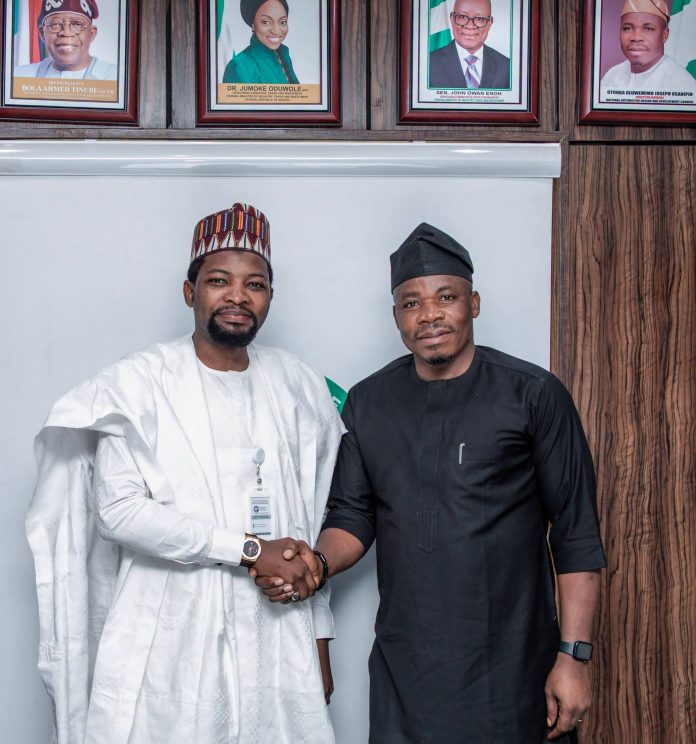
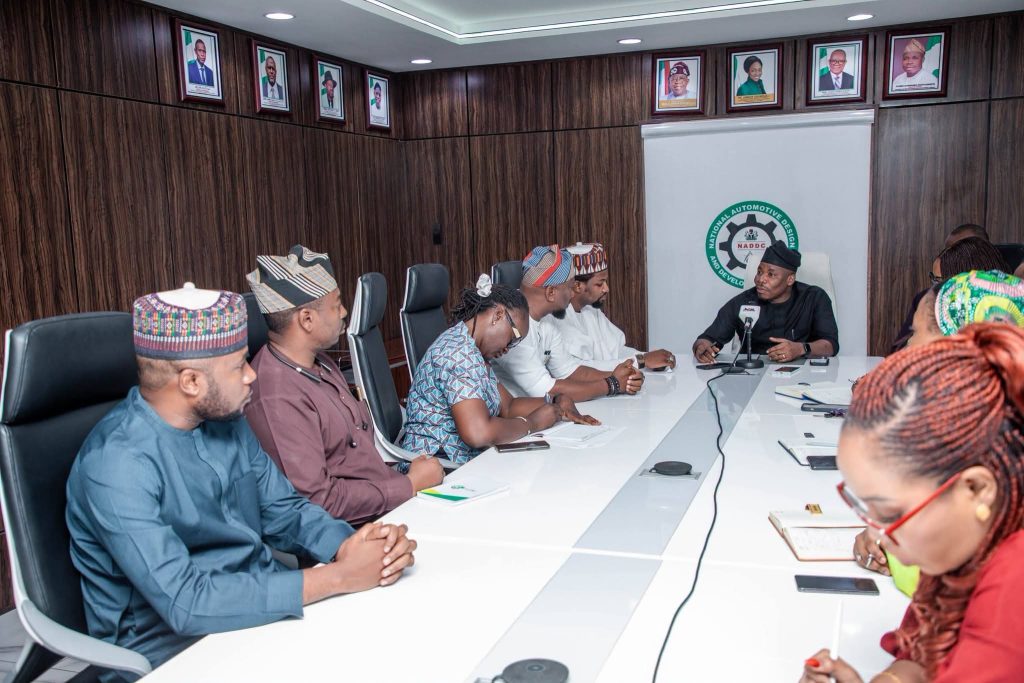
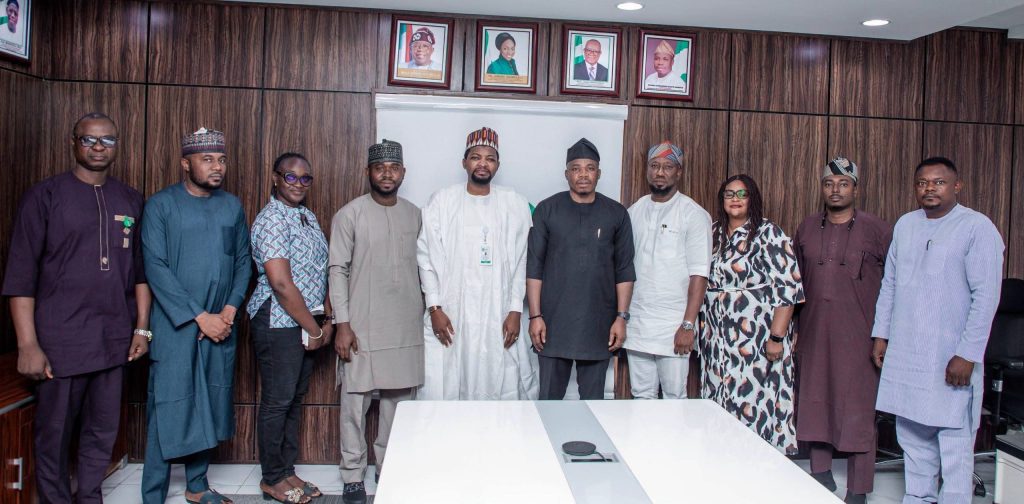
The National Automotive Design and Development Council (NADDC) on Wednesday, 12 August 2026, received a delegation from the National CNG Forum (NCNG-F), led by its Chairman, Faruk Abdullahi, at the Council’s headquarters in Abuja.
The visit focused on the future of Compressed Natural Gas (CNG) in Nigeria and its close relationship with the development and transformation of the country’s automotive industry. The engagement provided an opportunity for both organisations to explore areas of collaboration that could strengthen Nigeria’s CNG ecosystem and support the growth of the local automotive sector.
Speaking during the visit, the Chairman of the National CNG Forum, Faruk Abdullahi, expressed their believe in a fruitful engagement with the Council to ensure successful implementation of the CNG policy, and cited several areas of collaboration between NADDC and NCNG-F. He identified technical standards and quality assurance, local content and indigenous manufacturing, skills development, and research and innovation as key areas of potential collaboration.
Abdullahi described NADDC as a strategic partner in the development of Nigeria’s automotive and CNG ecosystem, stressing that government institutions and industry stakeholders must work together to ensure that the transition to CNG goes beyond a change of fuel. According to him, the CNG transition should serve as a catalyst for automotive industrialisation, local content development, skills acquisition, innovation and job creation.
He added that the National CNG Forum is committed to bringing the practical experience and perspectives of industry stakeholders to the table while supporting the objectives of the Federal Government. He emphasized the need for stronger collaboration between government agencies and the private sector to address challenges and maximize the opportunities presented by CNG.
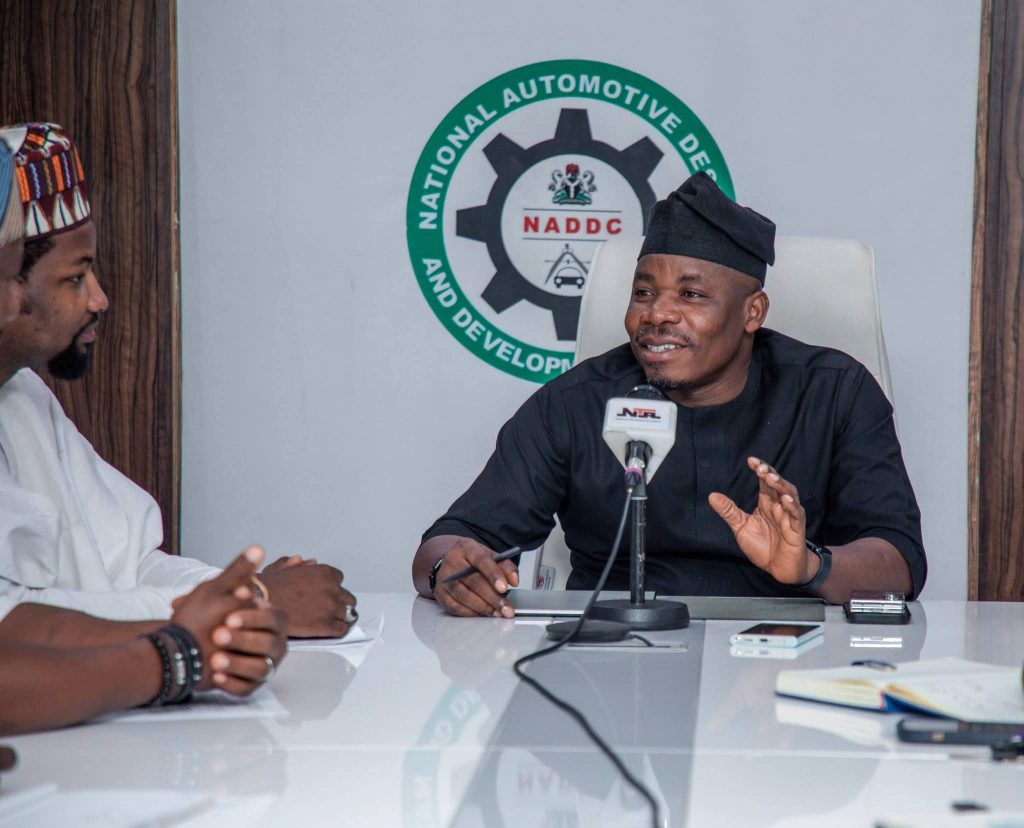
Responding, the Director-General/Chief Executive Officer of NADDC, Otunba Oluwemimo Joseph Osanipin, highlighted Nigeria’s abundant natural gas resources and the economic benefits of CNG as an alternative fuel. He noted that CNG is cheaper to maintain and more sustainable than Premium Motor Spirit (PMS), stressing that its wider adoption could have a significant impact on the Nigerian economy.
The NADDC DG further stated that the CNG transition has the potential to generate employment and contribute significantly to industrial development. He emphasized that achieving these benefits requires the collective efforts of government, the private sector, industry stakeholders and relevant forums that can aggregate challenges, opportunities and practical solutions.
He therefore called for sustained collaboration among stakeholders to develop a robust CNG ecosystem that would not only support cleaner and more affordable mobility but also promote local manufacturing, skills development, innovation, employment generation and the overall growth of Nigeria’s automotive industry.
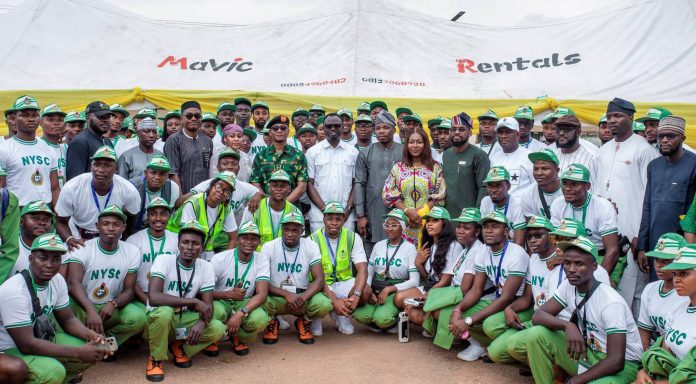
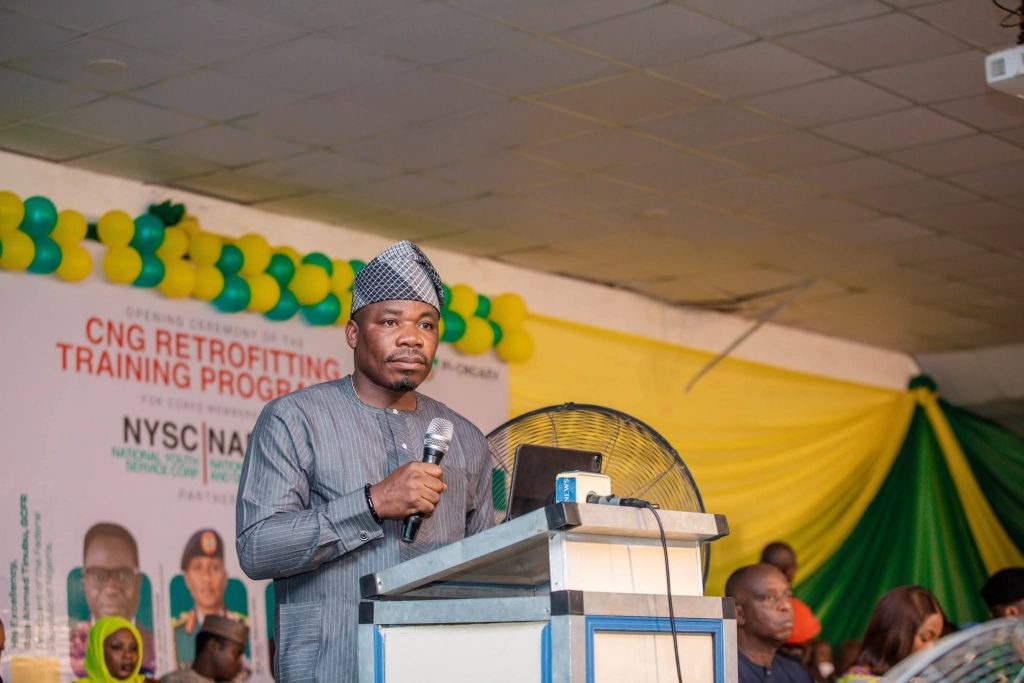
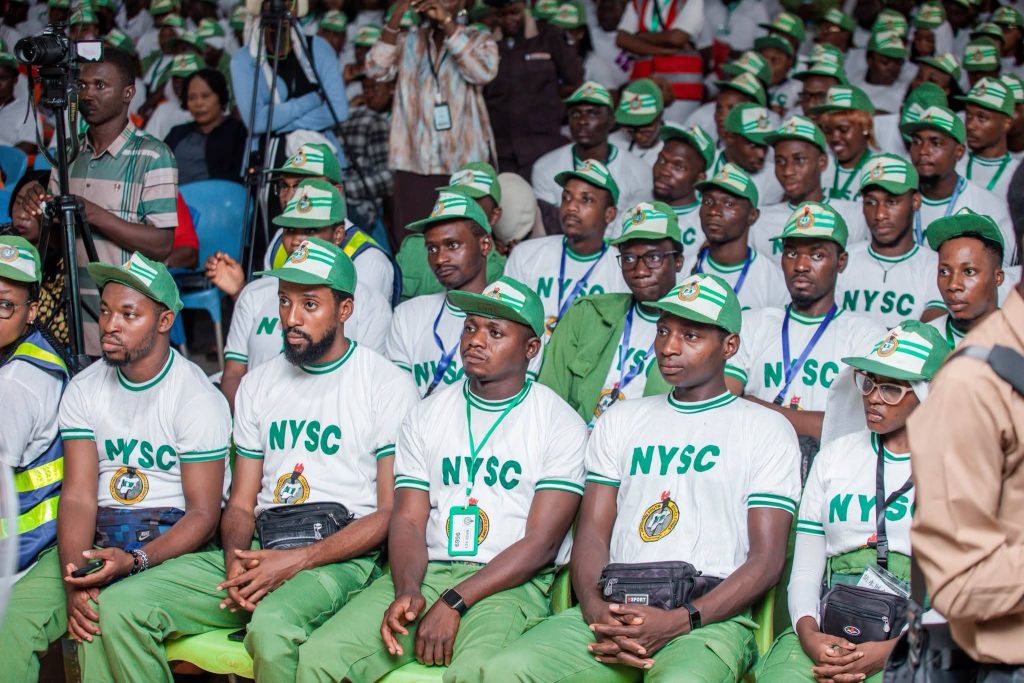
The National Automotive Design and Development Council (NADDC), in collaboration with the National Youth Service Corps (NYSC), has flagged off a Compressed Natural Gas (CNG) Retrofitting Training Programme for 300 Corps Members, aimed at equipping young Nigerians with technical skills for employment and entrepreneurship in Nigeria’s CNG and clean mobility ecosystem. The programme was launched at the NYSC Orientation Camp, Kubwa, Abuja on August 11, 2026, under the NYSC Skills Acquisition and Entrepreneurship Development (SAED) Programme.
Speaking at the opening ceremony, the Honourable Minister of Youth Development, Hon. Ayodele Olawande, said Nigeria’s transition towards cleaner, cheaper and more sustainable energy under the leadership of President Bola Ahmed Tinubu, GCFR, would create new industries, businesses and jobs. He stressed the need to equip Corps Members with practical skills, noting that the training goes beyond certificates to skills that can lead to jobs, income and sustainable businesses.
The Director-General of NADDC, Otunba Oluwemimo Joseph Osanipin, described the initiative as a strategic investment in Nigeria’s youth and a demonstration of inter-agency collaboration in developing human capital for cleaner mobility. He noted that skilled technicians and safety professionals are critical to the growth of the CNG sector.
Osanipin urged participating Corps Members to see the training as a pathway to employment and entrepreneurship. He announced that certification would be provided free of charge to participating Corps Members and encouraged beneficiaries to take the training seriously, adhere to safety requirements and join the skilled workforce needed to drive CNG conversion and clean mobility in Nigeria.
Also speaking, the Director-General of the NYSC, Brigadier General Olakunle Oluseye Nafiu, described the programme as a step towards youth empowerment. He explained that the pilot phase would cover one state in each of the six geopolitical zones: the Federal Capital Territory, Kano, Adamawa, Lagos, Edo and Enugu.
He stated that Corps Members would receive practical skills in CNG vehicle conversion and maintenance. According to him, the initiative complements the SAED programme by providing specialised skills that can improve Corps Members’ prospects for employment and self-employment beyond their service year.
The programme is being implemented by NADDC and NYSC, with support from the Federal Ministry of Youth Development, the Presidential Initiative on CNG and Electric Vehicles (PCNGI-EV), and the Special Assistant to the President on Youth Initiatives (Monitoring and Delivery), Dr. Titilope Gbadamosi.
The flag-off marks a milestone in connecting youth empowerment with Nigeria’s energy and automotive transition. Through the programme, NADDC provides technical expertise and industry-focused capacity development, while NYSC provides the platform for reaching Corps Members across the country.
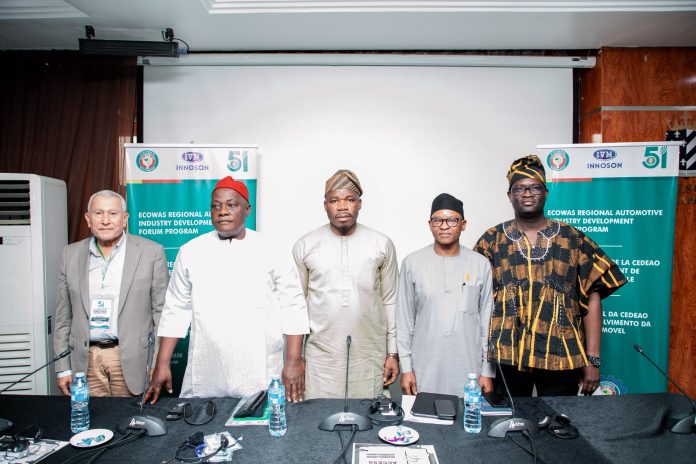
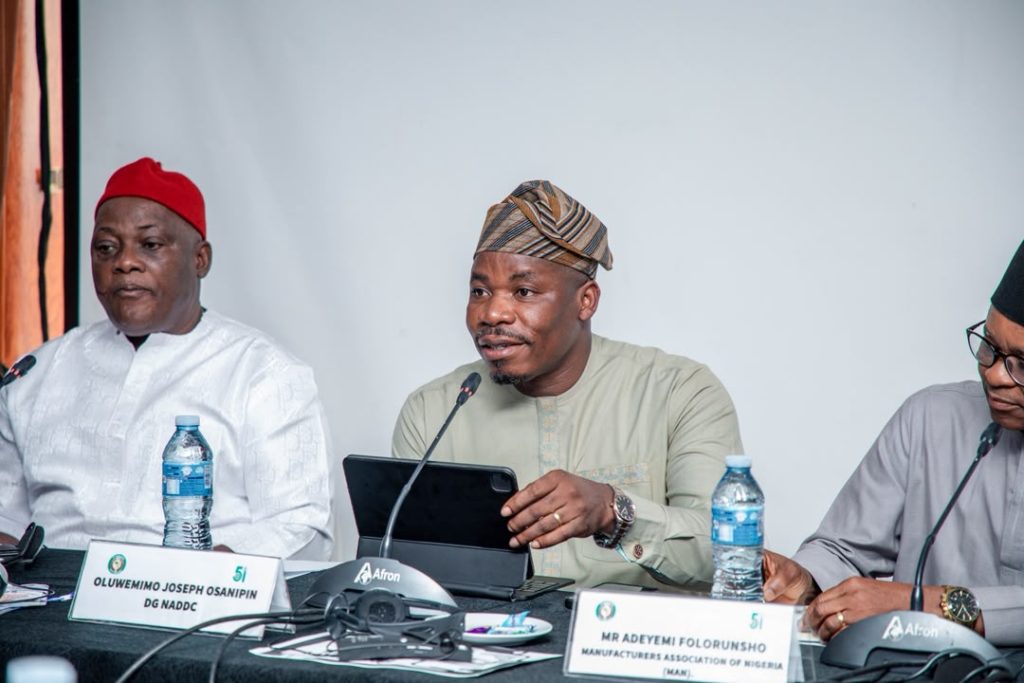
The Director-General of the National Automotive Design and Development Council (NADDC), Otunba Oluwemimo Joseph Osanipin, on 5th August 2026 moderated a high-level panel session on Day Two of the ECOWAS Regional Automotive Industry Development Forum in Abuja, where policymakers, manufacturers, regulators and industry leaders explored strategies for attracting investment into automotive manufacturing and assembly across West Africa.
The panel, themed “Unlocking Investor Commitment to Automotive Manufacturing and Assembly Across the ECOWAS Region,” examined the policy, regulatory and market reforms needed to stimulate sustainable investment and strengthen the region’s automotive industry.
In his opening remarks, Osanipin highlighted the sector’s potential to drive industrialisation through local manufacturing, component production, technology transfer, job creation and stronger regional value chains. He noted that despite West Africa’s growing vehicle market, challenges such as dependence on imported vehicles, underutilised assembly capacity, fragmented markets, limited local sourcing and policy uncertainty continue to hinder investment. He stressed the need for predictable policies, harmonised regulations and stronger collaboration between governments, regulators and the private sector to create an enabling environment for long-term investment.
The panel featured the Chairman/CEO of Innoson Vehicle Manufacturing (IVM), Chief Innocent Chukwuma; Plant Manager of Japan Motors Ghana, Mr. Mohammed Byrouth; a representative of the Manufacturers Association of Nigeria (MAN), Mr. Adeyemi Folorunsho; and the Director-General of the Ghana Standards Authority, Prof. George Agyei. Discussions focused on improving policy certainty, strengthening local component manufacturing, supporting SMEs, promoting regional sourcing and harmonising automotive standards and vehicle homologation across ECOWAS Member States to enhance market access and investor confidence.
The session concluded with a collective call for coordinated regional policies that will encourage investment, deepen regional integration and position ECOWAS as a competitive hub for automotive manufacturing and assembly.
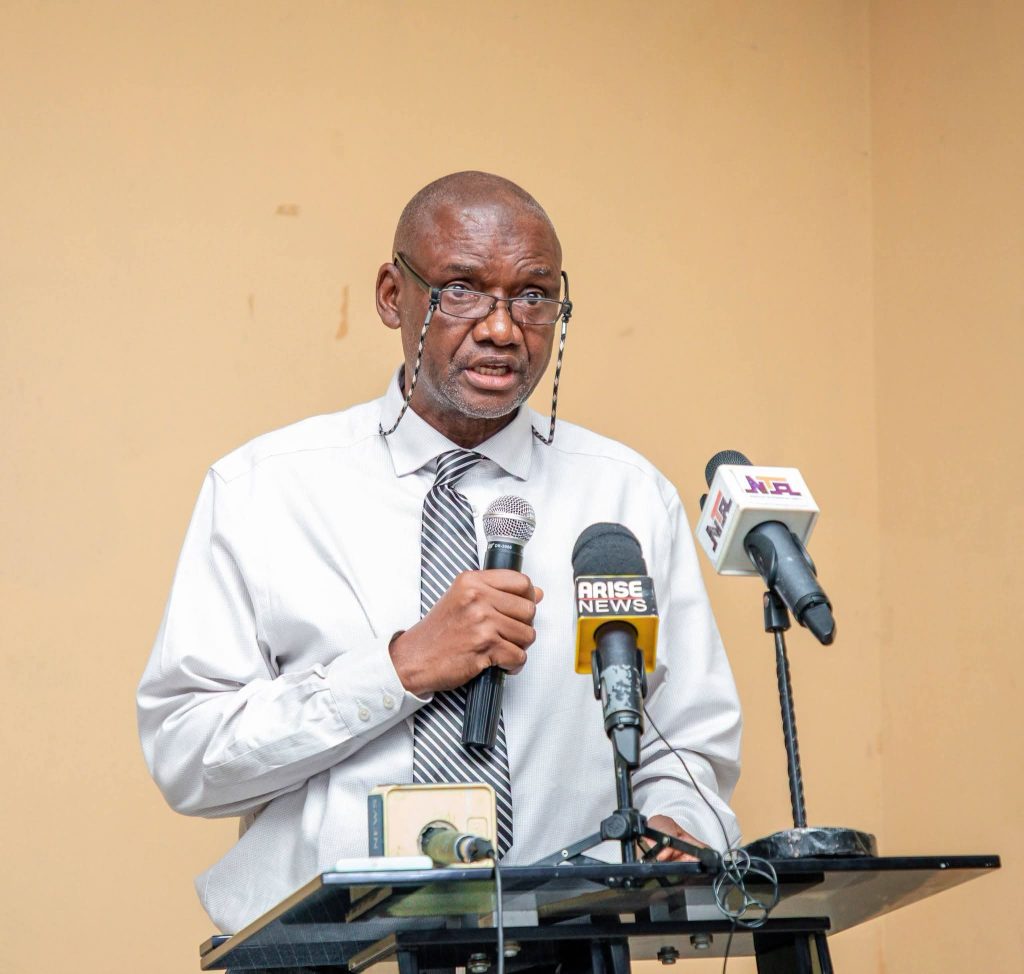
On 4th August 2026, the National Automotive Design and Development Council (NADDC) has commenced a sensitization programme for transporters participating in the E10 Bioethanol Pilot Programme, reaffirming the Federal Government’s commitment to promoting cleaner, more sustainable transportation and strengthening Nigeria’s automotive industry.
Speaking at the programme, the Director, Vehicle Electrification Department, Engr. A. N. Ayinde, who represented the Director-General NADDC,Otunba Oluwemimo Joseph Osanipin, welcomed participants and commended the transport unions, NNPC Retail Limited, the Nigerian Midstream and Downstream Petroleum Regulatory Authority (NMDPRA), government agencies, technical partners, and selected drivers for supporting the initiative.
He described the E10 Bioethanol Pilot Programme as a major milestone in Nigeria’s transition to cleaner energy, explaining that the pilot involves the use of a fuel blend consisting of 10 percent bioethanol and 90 percent Premium Motor Spirit (PMS). According to him, the programme will assess the fuel’s technical performance, operational feasibility, environmental benefits, and economic viability under Nigerian conditions, with the findings expected to guide future policies on cleaner transportation fuels.
Engr. Ayinde emphasized that transport operators are critical to the success of the pilot programme, noting that their experiences and feedback will provide valuable data for evaluating the performance of E10 fuel in everyday operations. He urged participants to actively engage in the programme, ask questions, and contribute meaningful feedback throughout the pilot phase.
He further stated that representatives of NNPC Retail Limited would provide participants with detailed information on fuel pricing, designated dispensing stations, product availability, operational readiness, and procedures for accessing E10 fuel, ensuring that all stakeholders are fully prepared for the successful implementation of the pilot.
The Director reaffirmed NADDC’s commitment to working with all stakeholders to advance cleaner fuel technologies, improve environmental sustainability, enhance energy security, and support the growth and competitiveness of Nigeria’s automotive industry. He thanked participants for their cooperation and encouraged them to approach the programme with professionalism and a shared commitment to the success of this important national initiative.
Governor Ahmed Usman Ododo of Kogi State has called on Kogites and Nigerians living in the United Kingdom to rally behind the economic reforms of President Bola Ahmed Tinubu, GCFR, project a positive image of Nigeria and channel their investments, expertise and global networks towards the development of Kogi State and the nation.
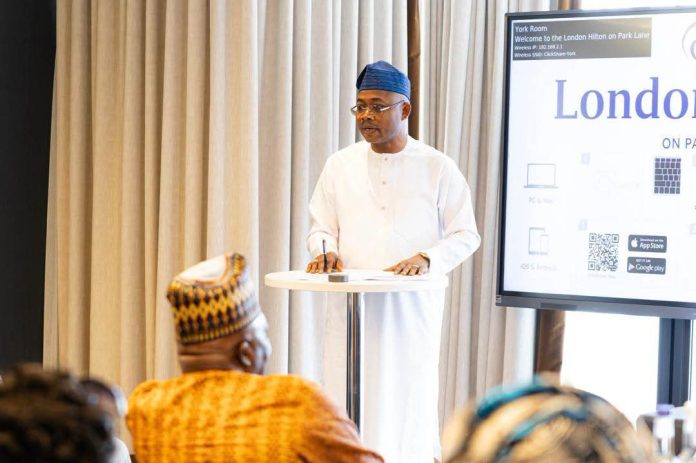
Speaking at a Town Hall Meeting with Kogites and Nigerians in London on Thursday, the Governor said Nigeria’s future depends on the collective efforts of its citizens both at home and abroad, urging the diaspora to become active partners in nation-building by supporting ongoing reforms and taking advantage of emerging investment opportunities in Kogi State.
Governor Ododo said the engagement was not merely an opportunity to reconnect with Kogites living abroad but a platform to strengthen collaboration between the diaspora and the state government in pursuit of sustainable development.
“You may have crossed oceans in search of opportunity, but you have not crossed beyond your identity. Wherever you excel, our homeland is honoured. Wherever you break new ground, our flag flies a little higher.
“Will we merely inherit history, or will we have the courage to make history? I believe ours is a generation called to make history.
“Bring home not only your investments, but also your ideas, your expertise, your innovation and your global networks. Nations are transformed not only by the wealth their people send home, but by the knowledge, values and vision they bring home,” the Governor said.
Governor Ododo said the unity deliberately nurtured in Kogi State over the last decade has become the foundation for the state’s rapid transformation, noting that the people have risen above ethnic and religious divisions to pursue a shared vision of development.
According to him, the progress recorded in the state demonstrates what can be achieved when people place the common good above sectional interests.
“There was a time when our differences were exploited against us. Today, we understand that poverty has no tribe, hunger has no religion and underdevelopment respects no ethnicity. Our unity has become the engine of our progress,” he said.
The Governor paid tribute to President Bola Ahmed Tinubu for taking difficult but necessary decisions to reposition the Nigerian economy, describing the President as a courageous leader who chose reform over convenience.
He said the removal of fuel subsidy, the unification of the foreign exchange market and ongoing fiscal reforms have significantly improved the financial capacity of states, enabling governments to invest more in infrastructure, education, healthcare, agriculture and other critical sectors.
Governor Ododo also highlighted key Federal Government interventions that are transforming Kogi State, including the approval of the Kogi International Airport, the Kogi Free Trade Zone, the Agricultural Processing Zone, renewed efforts to revive the Ajaokuta Steel Company and the reconstruction of strategic federal roads across the state.
He added that President Tinubu’s sustained investment in security, agriculture, solid minerals development, tax reforms and policies to improve the ease of doing business are restoring investor confidence and laying the foundation for long-term economic growth.
“President Bola Ahmed Tinubu chose reform over comfort. Leadership is not measured by the ease of today’s decisions but by the prosperity they create for tomorrow.
“If we were dissatisfied with past leadership, we have no reason to transfer that dissatisfaction to an administration that is already correcting the mistakes of the past. President Bola Ahmed Tinubu has been honest about his approach to leadership, and Nigeria can only get better if we continue to support him and his reforms,” Governor Ododo stated.
The Governor said Kogi State has translated the opportunities created by the Federal Government into visible progress through investments in road infrastructure, free education from primary to secondary school, payment of public examination fees, improved healthcare delivery, expanded health insurance coverage, agricultural mechanisation and targeted empowerment programmes for youths and women.
He noted that security remains the bedrock of development, explaining that the state’s collaboration with the Federal Government, the Office of the National Security Adviser and security agencies has created a safer environment for farming, commerce and investment.
Governor Ododo also used the occasion to promote the Kogi Rebrand Initiative, urging Kogites everywhere to become ambassadors of the state by projecting its strengths and opportunities.
“Peace is the first infrastructure of development, and we will continue to protect it.
“No nation rises above the story it tells about itself. Let us become ambassadors of hope, confidence and possibility because every positive story we tell about Kogi State and Nigeria opens another door to investment and opportunity.
“When we continually speak ill of our own country, we often end up hurting ourselves more than anyone else. Let us speak with honesty, criticise with patriotism and promote our nation with confidence,” he said.
Also speaking, the Member representing Kabba/Bunu/Ijumu Federal Constituency in the House of Representatives, Hon. Salman Idris, said Governor Ododo is working closely with the Federal Government towards the resuscitation of the Ajaokuta Steel Company, describing the initiative as one that will redefine the economic future of Kogi State and Nigeria.
He said the Governor’s development agenda is already producing remarkable results across the state and expressed confidence that history would remember him for his bold leadership.
“Governor Ahmed Usman Ododo is writing his name in gold with his development strides. I have no doubt that he will make history. I urge Kogites in the diaspora to work closely with the Governor by bringing home their investments, expertise and networks to support the development of our dear state,” Hon. Idris said.
Participants at the Town Hall Meeting commended Governor Ododo for what they described as the remarkable transformation taking place across Kogi State, applauding his administration’s achievements in infrastructure, security, education, healthcare and economic development.
They described the engagement as unprecedented, noting that it was the first time in a long while that a sitting Governor had travelled to the United Kingdom to engage directly with Kogites in the diaspora and provide a comprehensive account of developments back home.
The participants pledged to support the Governor’s administration by deploying their professional expertise, technical knowledge and global experience to the development of Kogi State while also mobilising investors to take advantage of the state’s enormous economic potential.
They also commended President Bola Ahmed Tinubu for implementing bold reforms which, in their view, are resetting Nigeria’s economy, strengthening investor confidence and laying the foundation for sustainable growth and shared prosperity.
The meeting ended with a renewed commitment by Kogites in the diaspora to deepen collaboration with the Kogi State Government and contribute meaningfully to the state’s continuing transformation.
Kingsley Femi Fanwo Hon. Commissioner for Information and Communications Kogi State
Vanguard News TheCable Premium Times BBC News CNN Africa Guardian Nigeria Nigerian Tribune Daily Trust Daily Times Nigeria Daily Monitor Kogi State Government
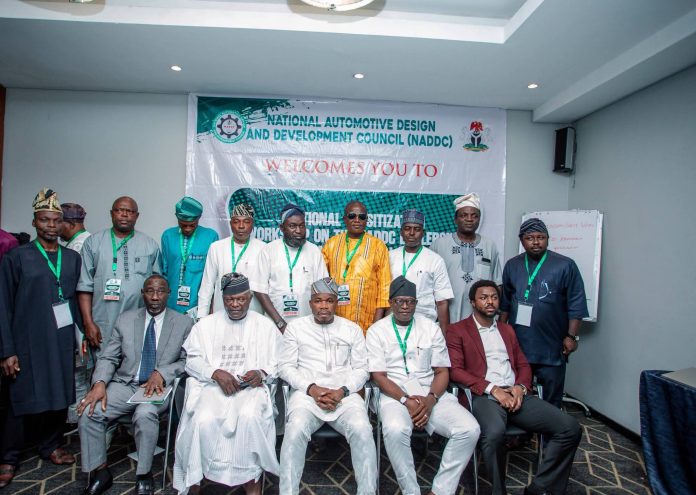
The National Automotive Design and Development Council (NADDC) has reaffirmed its commitment to transforming Nigeria’s automotive industry through digital innovation with the commencement of the South- West Zone of the National Sensitization Workshop on the NADDC Dealership Registration Portal, held on Thursday, 23rd July 2026, at Radisson Hotel, Ikeja, Lagos.
Speaking at the workshop, the Director-General NADDC, Otunba Oluwemimo Joseph Osanipin, emphasized that the workshop marks a significant step towards strengthening regulation and advancing the growth of the automotive dealership sub-sector, while describing Lagos as the commercial hub of Nigeria.
The Director-General explained that the Dealership Registration Portal, a key initiative under the National Automotive Industry Development Plan (NAIDP 2023–2033), will deliver several benefits to the automotive industry. According to him, the portal will:
– Formalize the dealership sub-sector through a centralized, real-time database;
– Improve market monitoring, vehicle verification, and regulatory compliance;
– Connect registered dealers with local vehicle manufacturers and government;
– Enhance dealers’ access to financing by increasing their credibility with financial institutions;
– Grant legal recognition to registered dealerships;
– Promote transparency, reduce bureaucratic bottlenecks and corruption through digitalization; and
– Support evidence-based policymaking while ensuring equal opportunities for both small and large-scale dealers.
Otunba Osanipin urged automotive dealers to embrace the portal and the registration process as a strategic partner for business growth rather than a regulatory burden. He noted that registration would strengthen dealers’ participation in national automotive policy development, improve ease of doing business, attract greater investment into the sector, and position Nigeria’s automotive industry for global competitiveness. He also encouraged participants to actively engage in the technical sessions and complete their registration, stressing that the future of Nigeria’s automotive industry is digital.
The NADDC DG thereafter officially declared the South-West Zone of the National Sensitisation Workshop open in Lagos, expressing confidence that the initiative will strengthen regulation, improve ease of doing business, enhance transparency, and support the sustainable growth and global competitiveness of Nigeria’s automotive industry
In his goodwill message, the Chairman, House Committee on Industry, House of Representatives, Hon. Dr. Enitan Dolapo Badru, commended NADDC for introducing the centralized Dealership Registration Portal, defining it as a timely initiative that aligns with the objectives of the National Automotive Industry Development Plan (NAIDP 2023–2033). Hon. (Dr) Enitan Badru who was ably represented by the Clerk of the House Committee on Industry, Bar. (Dr) Usman Ibrahim stated that the portal will strengthen planning, policy formulation, regulatory oversight, and reliable data collection while promoting industrialization, job creation, and economic diversification. He assured members of the Association of Motor Dealers of Nigeria (AMDON) and other stakeholders of the National Assembly’s continued support, emphasizing that formalizing dealership operations will protect businesses, boost investor confidence, and expand access to credit, insurance, and global business opportunities.
Also speaking, Prince Ajibola Adedoyin, National President of the Association of Motor Dealers of Nigeria (AMDON), applauded NADDC for introducing the Dealership Registration Portal, adding that the portal is a timely initiative that would formalize the dealership sector, enhance the credibility of genuine dealers, improve consumer confidence, and increase access to government support and financing opportunities. He pledged AMDON’s commitment to mobilizing its members nationwide to register on the portal and support the digital transformation of Nigeria’s automotive industry.
The workshop featured technical demonstrations and interactive sessions on the NADDC Dealership Registration Portal, providing participants with practical guidance on the registration process and the benefits of joining the national dealership database.
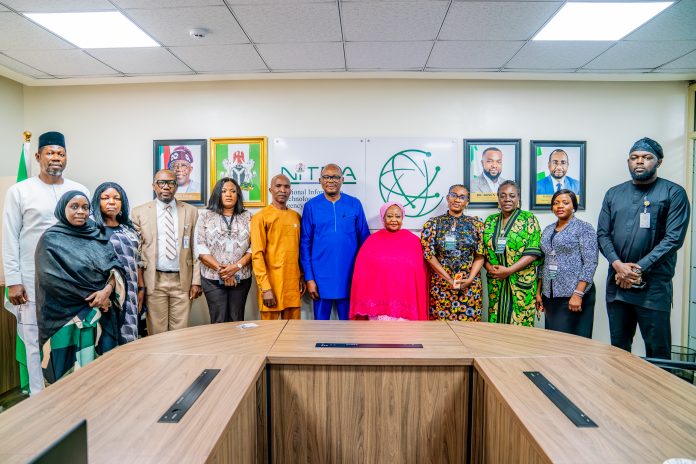
In a strategic push to bridge the gender digital divide, the National Information Technology Development Agency (NITDA) has partnered with the Nigeria Association of Women Journalists (NAWOJ) to advance women’s digital inclusion and drive the nation’s transformation agenda.
The partnership was cemented during a courtesy visit to NITDA Director General, Kashifu Inuwa, CCIE, by a NAWOJ delegation led by National President Comrade Aishatu Ibrahim, who introduced the agency to the forthcoming Women in Security (WINSEC) Summit & Awards 2026.
Inuwa, represented by Dr. Aristotle Onumo, the Director of the Stakeholders Management and Partnerships Department, assured the association that NITDA would not only participate in the conference, but also support the success of the conference.
Inuwa hailed the NAWOJ for creating a platform for peacebuilding, dialogue on security and women’s inclusion, which he described as one of the critical areas NITDA is focused on to ensure that more women obtain digital literacy and skills under the National Gender Inclusive Strategy.
Beyond NITDA’s plan to participate in the conference, the DG noted that a robust partnership between the organisations would engender meaningful opportunities and initiatives through which many more women can access digital literacy.
“Inclusivity is the key to everything we do at NITDA. We clearly defined that 40 per cent of our programmes must recognise the issue of gender. We ensure that women are adequately represented and positioned to benefit greatly from the programmes that we organise in the agency.
“We graciously accept to participate actively in that conference. Apart from acquiring skills among journalists themselves, partnership with NAWOJ will also serve as a platform through which we can also reach out to various women’s groups across the federation,” Inuwa said.
Earlier, Comrade Ibrahim commended the DG for his visionary and transformational leadership which has continued to position NITDA as the catalyst for Nigeria’s digital economy through its various programmes.
She explained that the Women in Security (WINSEC) Summit and Awards 2026 is an initiative of NAWOJ designed to promote collaboration among government institutions, security agencies, technology experts, the media, and other stakeholders to address contemporary security challenges.
According to Comrade Ibrahim, the association also aims to recognise outstanding individuals and institutions that have demonstrated excellence in security, governance, and innovation while fostering meaningful dialogue on the role of technology in building a safer and more resilient Nigeria.
“We deeply appreciate your exemplary leadership, passion for innovation, and unwavering commitment to building a digitally empowered Nigeria. We respectfully invite the agency to partner with NAWOJ in making this landmark initiative a success.
“We look forward to establishing a long-term partnership with NITDA that will empower women journalists with cutting-edge digital skills, support digital inclusion and contribute to innovation, digital literacy, and human capital development,” the NAWOJ president added.
Both organisations expressed optimism that the meeting would lay a solid foundation for a rewarding partnership agreement with specific and clearly defined objectives that will support digital inclusion and contribute to innovation, digital literacy, and human capital development.(END)